Recent breakthroughs in artificial intelligence (AI) are fundamentally changing how clinicians approach contact lens fitting. Traditionally, achieving the "perfect fit" was a process of trial and error, often requiring multiple office visits and discomfort for the patient. Today, we are entering the era of Precision Vision.
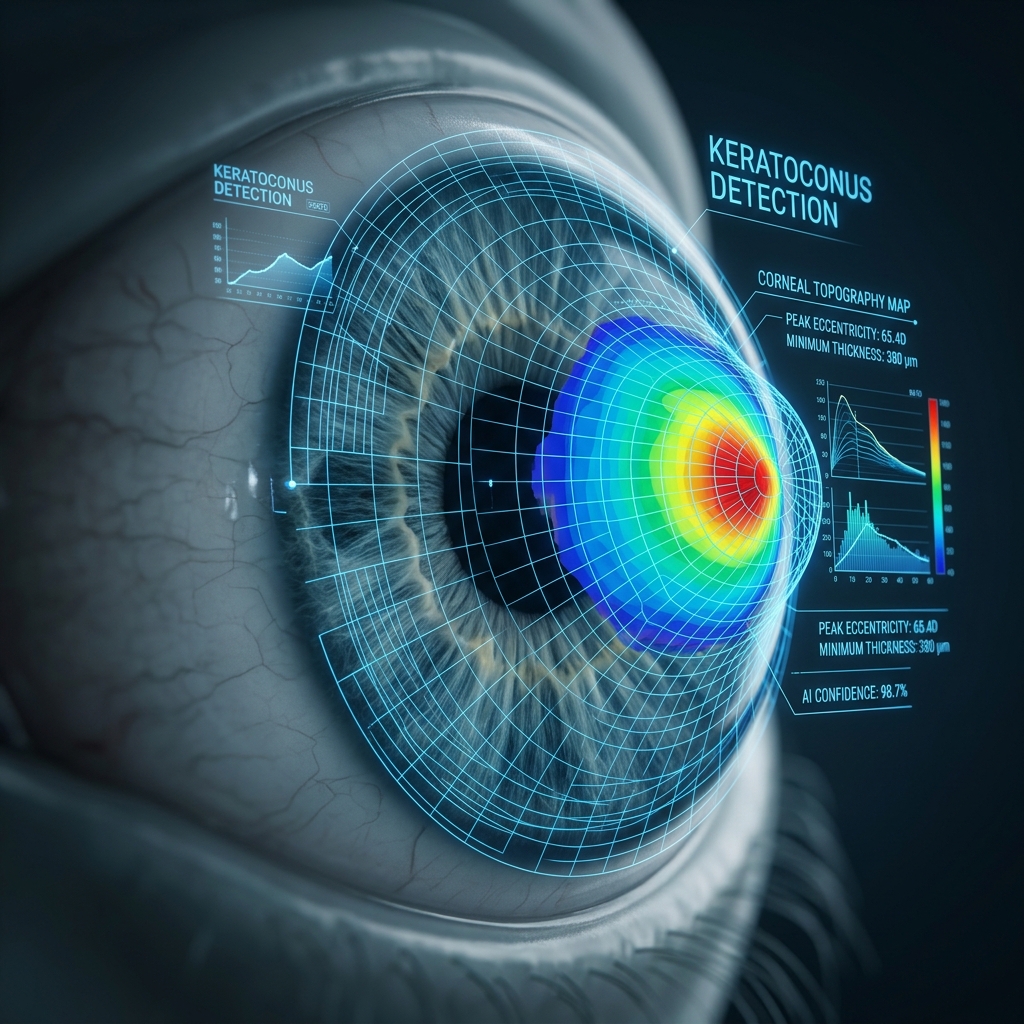
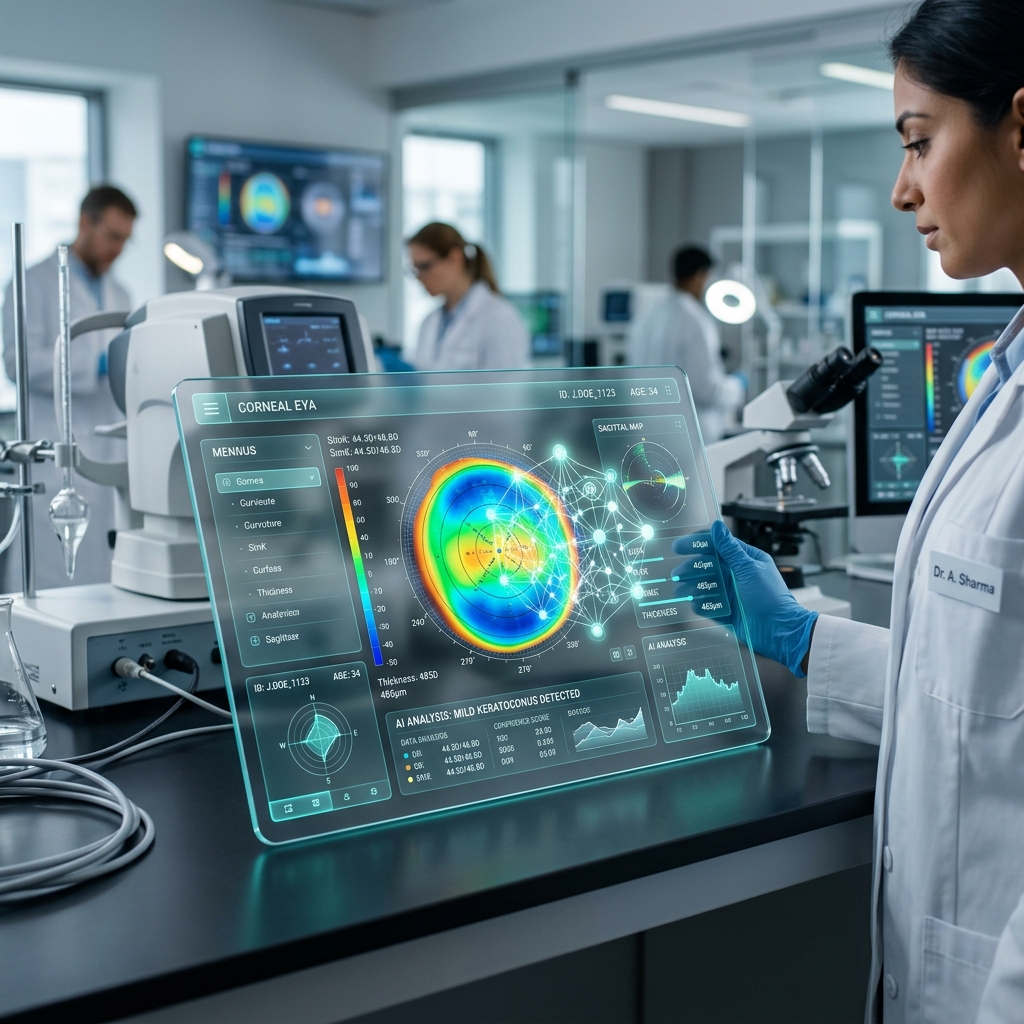
Advanced machine learning models are now capable of analyzing massive datasets generated by modern corneal topography. These algorithms don't just map the surface of the eye; they predict how various lens materials and geometries will interact with the unique tear film and lid pressure of an individual patient.
Redefining "Chair Time"
One of the most significant impacts of AI in clinical practice is the drastic reduction of "chair time." By leveraging AI-driven predictive modeling, first-fit success rates have soared to over 90%. This efficiency allows doctors to focus more on patient education and overall ocular health management, rather than manual adjustments.
As the neural networks continue to learn from millions of successful fits globally, the accuracy increases exponentially. We are nearing a future where a simple 3D scan of the eye will result in a custom-engineered lens manufactured specifically for that user, ensuring perfect comfort from the first second of wear.